

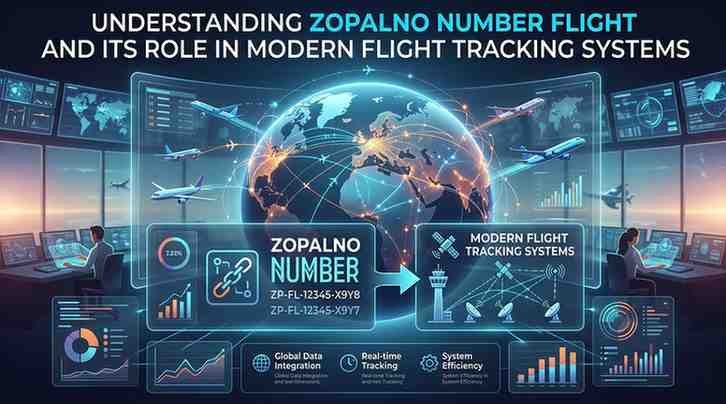
Air travel has become increasingly digital, with passengers relying on accurate and real-time information to manage their journeys. One emerging term that appears in search discussions is zopalno number flight, which is often associated with flight identification, tracking systems, and airline scheduling references. While the term is not tied to a specific airline, it is commonly used in conceptual explanations of how flight numbers and tracking systems operate in modern aviation.
Understanding how flight identification works helps travelers stay informed, reduce confusion, and plan better journeys. With advanced airline technology and global aviation systems, flight tracking has become more accurate, accessible, and user-friendly than ever before.
What is zopalno number flight and how it is used
The concept of zopalno number flight can be understood as a reference to how flight numbers are assigned and used within aviation systems. In general, flight numbers are unique identifiers given to each scheduled flight by airlines. These identifiers help passengers, airport staff, and air traffic controllers track and manage flights efficiently.
In digital aviation systems, a term like zopalno number flight may represent a structured flight reference used in databases or informational platforms. It helps users search flight schedules, departure times, and arrival updates without confusion.
Airlines assign flight numbers based on routes, direction, and operational planning. These identifiers are crucial for organizing global air traffic and ensuring smooth communication across different airports and systems.
How flight numbering systems work in aviation
Flight numbering systems follow structured patterns designed to simplify air travel management. Each flight is assigned a unique number that distinguishes it from other flights operated by the same airline.
In the context of zopalno number flight, this system reflects how digital platforms categorize and display flight-related information. Flight numbers often include a combination of letters and digits that represent airline codes and route identifiers.
Airlines use standardized systems to avoid duplication and confusion. For example, even if multiple flights operate daily between two cities, each one will have a different number based on timing and direction.
Importance of standardized flight identification
Standardized flight identification helps improve communication between pilots, air traffic controllers, and passengers. It ensures that every flight can be tracked accurately in real time, reducing errors and improving safety.
How to track zopalno number flight status online
Modern aviation technology allows passengers to track flights using online platforms, mobile apps, and airline websites. Tracking systems provide real-time updates on departure times, delays, gate changes, and arrival schedules.
When searching for zopalno number flight, users typically look for status updates such as timing changes, boarding information, and live flight location. These systems collect data from air traffic networks and update passengers instantly.
Travelers can also receive notifications about schedule changes, ensuring they stay informed throughout their journey.
Common tracking tools and updates
Flight tracking tools use GPS data, airline systems, and airport communication networks to deliver accurate updates. These tools make it easier for passengers to monitor flight progress and plan accordingly.
Real-time tracking reduces uncertainty and improves the overall travel experience by keeping passengers informed at every stage.
Common issues travelers face with flight information
Even with advanced technology, passengers may sometimes experience issues related to flight information accuracy or delays in updates. In systems referencing zopalno number flight, common challenges include delayed synchronization, incorrect schedule displays, or confusion due to similar flight numbers.
Weather conditions, technical issues, and air traffic congestion can also affect flight schedules, leading to unexpected changes. When this happens, passengers rely heavily on digital updates and airline notifications.
Clear communication from airlines plays a key role in reducing passenger confusion and ensuring smooth travel experiences.
Future of digital flight tracking and airline systems
The future of aviation is heavily influenced by digital transformation. Airlines are continuously improving their tracking systems to provide faster, more accurate, and more detailed flight information.
Advanced technologies such as artificial intelligence, predictive analytics, and satellite tracking are expected to enhance how systems like zopalno number flight are managed and displayed in the future.
These innovations will help airlines predict delays, optimize routes, and improve passenger communication. As a result, travelers will experience more reliable and efficient flight management systems.
Digital transformation is also making air travel more connected. Passengers can now access all travel information from a single device, making the entire journey smoother and more convenient.
FAQ Section
What does zopalno number flight mean?
It refers to a conceptual flight identification term used in discussions about flight tracking and aviation systems.
How are flight numbers assigned?
Airlines assign unique numbers based on routes, schedules, and operational planning.
Can passengers track flights in real time?
Yes, modern tracking systems allow passengers to monitor flights using apps and airline websites.
Why do flight schedules change?
Changes may occur due to weather, technical issues, or air traffic conditions.
Conclusion
Modern aviation relies heavily on digital systems to manage and track flights efficiently. Concepts like zopalno number flight highlight the importance of structured flight identification and real-time tracking in today’s travel industry.
As technology continues to evolve, flight tracking systems will become even more advanced, offering greater accuracy and convenience for passengers worldwide. Understanding these systems helps travelers stay informed, reduce uncertainty, and enjoy a smoother travel experience.